
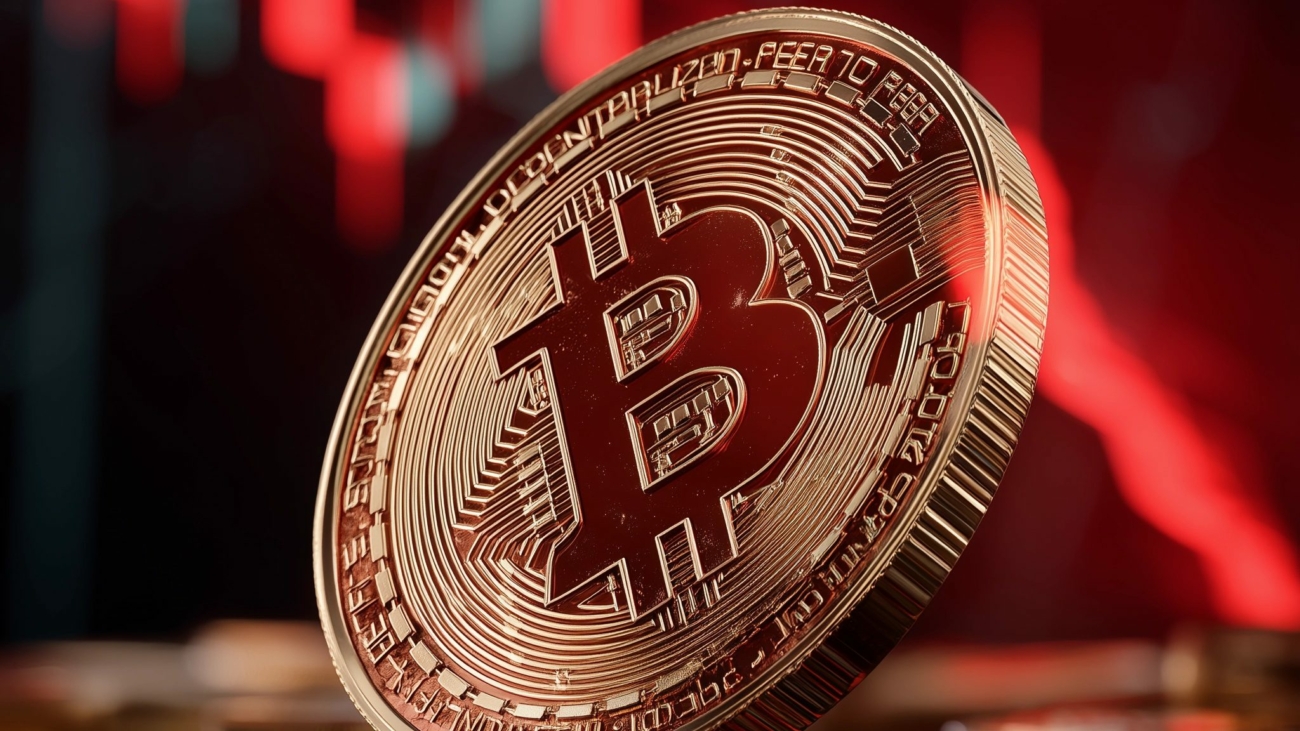
Cryptocurrency markets were rattled on April 2, 2026, as President Donald Trump delivered a primetime national address that sent shockwaves through financial markets worldwide. Bitcoin, the world’s largest cryptocurrency by market capitalization, plunged toward the $66,000 level as Trump’s unexpectedly hawkish stance on Iran dashed hopes of near-term geopolitical de-escalation. The resulting turmoil wiped out more than $440 million in leveraged positions within hours, underscoring how deeply intertwined digital asset prices have become with global macroeconomic events.
Trump’s Iran Address: What Was Said and Why It Mattered
In a nationally televised address, President Trump departed sharply from the conciliatory tone markets had anticipated. Rather than signaling a diplomatic off-ramp in the ongoing U.S.–Iran standoff, Trump promised to hit Iran “extremely hard” within two to three weeks, specifically threatening to target power plants and energy infrastructure if the Strait of Hormuz was not reopened or secured for international shipping. The speech reversed a short-lived global market rally that had sent Bitcoin briefly touching $69,268 between late March and April 1.
The reaction was immediate and severe. Within hours of the address, Bitcoin had fallen to $65,696 — a multi-week low — before partially recovering to the $66,000–$67,000 range by the following morning. The broader crypto market shed roughly $60 billion in total market capitalization, with altcoins faring even worse than Bitcoin. Ethereum dropped 4.4%, Solana fell more than 5%, and many smaller tokens saw double-digit percentage declines in the 24-hour window following the speech.
The Liquidation Cascade: $440 Million Wiped Out
For traders using leverage, the volatility was devastating. Data from on-chain analytics platforms revealed that over $440 million in leveraged crypto positions were liquidated in the 24 hours following Trump’s address, with long positions — bets that prices would rise — taking the overwhelming majority of the damage. Bitcoin’s open interest, which had been building steadily through late March as traders positioned for an anticipated April rally, collapsed sharply as margin calls cascaded through derivatives markets.
The liquidation event was the largest single-day wipeout since early February 2026, when fears about the strength of the U.S. economy first began weighing on risk assets. Perpetual futures funding rates, which had been modestly positive heading into April — suggesting bulls were paying to maintain their positions — flipped negative briefly, indicating that the market’s short-term orientation had shifted decisively bearish in the wake of Trump’s speech.
Oil Surges as Bitcoin Correlates With Risk Assets
One of the most striking aspects of the market reaction was the simultaneous surge in oil prices. Brent crude futures climbed above $100 per barrel for the first time in months as traders priced in the possibility of supply disruptions in the Persian Gulf. This dynamic placed Bitcoin in an awkward position: as a purported inflation hedge, higher oil prices might theoretically be bullish for digital assets over the long term, yet in the immediate term, the uncertainty and risk-off sentiment outweighed any inflation-hedge narrative.
Data underscores this correlation shift. The 30-day rolling correlation between Bitcoin and the S&P 500 has climbed to approximately 0.75, one of the highest readings on record. This means that for now, institutional investors are treating Bitcoin much more like a high-growth technology proxy than an uncorrelated safe-haven asset. When equities sold off on geopolitical uncertainty, Bitcoin followed with near-identical intensity.
Crypto Fear & Greed Index Crashes to 9: Extreme Fear
The psychological damage from the April 2 sell-off was reflected vividly in the Crypto Fear & Greed Index, which measures market sentiment on a scale of 0 (maximum fear) to 100 (maximum greed). By April 3, the index had plummeted to just 9 — firmly in “Extreme Fear” territory. To contextualize how severe this reading is, the last time the index registered below 10 was during the market contagion following major exchange collapses in 2022.
Extreme fear readings of this magnitude historically have a mixed record as contrarian buy signals. On one hand, some of Bitcoin’s most significant long-term accumulation opportunities have occurred when the Fear & Greed Index dipped below 15. On the other hand, in periods of genuine macroeconomic dislocation — rather than purely crypto-specific downturns — sustained fear readings can persist for weeks or months before a meaningful recovery emerges.
Bitcoin’s Price Action: Key Levels to Watch
From a technical analysis perspective, Bitcoin’s price action in the $65,000–$67,000 range is critically important. This zone represents a confluence of multiple support factors. First, the 200-day moving average sits approximately at $64,500, providing a significant long-term trend support level that would signal serious technical deterioration if breached. Second, on-chain data shows that a large cluster of Bitcoin addresses acquired their holdings in the $62,000–$68,000 range, meaning that many retail and institutional holders in this zone are near breakeven and may defend these levels aggressively.
To the upside, Bitcoin needs to reclaim and hold above the $69,000–$70,000 range to resume its broader bullish structure. The $70,000 level has functioned as both psychological and technical resistance multiple times over the past several months, and a decisive close above it would likely attract renewed institutional buying interest. Analysts at several research firms note that Bitcoin price prediction models for April 2026 call for a recovery toward $72,000 by mid-month, contingent on the $67,500 support level holding on a daily closing basis.
Corporate Treasury Holders Under Pressure
The Bitcoin sell-off also placed renewed scrutiny on corporations that have adopted Bitcoin treasury strategies. Several publicly traded companies that have accumulated Bitcoin as a balance-sheet asset saw their equity prices decline sharply, with some falling more than 10% in a single session. For companies whose market valuations had become tightly correlated with Bitcoin price movements, the geopolitical risk-off environment created a compounding effect — equity investors were selling both because of general market uncertainty and because their Bitcoin holdings had depreciated simultaneously.
MARA Holdings, which had already been in the news following a $1.3 billion loss reported in its Q4 2025 earnings and a 15% workforce reduction as it pivots toward energy and digital infrastructure, saw further pressure on its stock. Analysts noted that the challenging environment for publicly traded Bitcoin proxy companies may accelerate consolidation in the space, with weaker balance sheets particularly vulnerable during extended periods of price suppression.
Geopolitical Risk: A New Normal for Crypto?
The events of April 2 are forcing a broader conversation in the cryptocurrency industry about the evolving relationship between digital assets and geopolitical risk. In Bitcoin’s early years, proponents argued it would function as a “digital gold” — an uncorrelated, censorship-resistant store of value that would appreciate during periods of geopolitical instability as investors sought refuge outside the traditional financial system. The reality in 2026 is considerably more nuanced.
While Bitcoin does exhibit some safe-haven characteristics during currency crises in emerging markets, its behavior during major developed-world geopolitical events has increasingly mirrored that of risk assets. This is likely a consequence of the asset class’s deepening integration with institutional finance: as hedge funds, pension funds, and corporate treasuries have allocated meaningful portions of their portfolios to digital assets, the correlation between crypto and broader risk sentiment has naturally increased.
Some analysts argue this dynamic may be temporary — that as Bitcoin’s market capitalization grows and its holder base broadens further, its correlation with equities and other risk assets will naturally diminish. Others contend that Bitcoin has irreversibly crossed the threshold from niche digital commodity to mainstream financial asset, and that its future behavior will increasingly reflect macroeconomic and geopolitical conditions rather than crypto-specific supply-and-demand dynamics.
Three Key Signals Traders Are Watching
With markets in flux, experienced crypto traders are focusing on three key signals to navigate the near-term environment. First, they are watching developments in the U.S.–Iran standoff closely. Trump has given a two-to-three week window, meaning the period between April 14–21 could be pivotal. Any signs of diplomatic resolution — or, conversely, kinetic military escalation — will almost certainly provoke sharp moves in both oil and crypto markets.
Second, traders are monitoring Bitcoin’s on-chain fundamentals, particularly exchange inflows and outflows. An increase in Bitcoin flowing onto exchanges typically signals that holders are preparing to sell, whereas sustained outflows indicate accumulation. In the days following the Trump address, on-chain data showed a modest increase in exchange inflows, suggesting some profit-taking at higher levels, but nothing indicative of a capitulation-level sell-off.
Third, participants are watching the broader macroeconomic calendar. The Federal Reserve’s April meeting and updated economic projections will provide important signals about the rate environment, with markets currently pricing in one rate cut for 2026. Any shift in that outlook — particularly if oil price increases begin feeding through into headline inflation — could complicate the Fed’s calculus and create additional headwinds for risk assets including crypto.
April’s Historical Track Record: Reason for Cautious Optimism?
Despite the gloomy near-term backdrop, some analysts point to April’s historically strong performance as a potential silver lining. Historical data shows that April has been one of Bitcoin’s best-performing calendar months, with positive returns recorded in the majority of years since 2013. Whether this seasonal pattern will hold in 2026’s uniquely challenging environment — characterized by geopolitical uncertainty, elevated correlation with equities, and extreme fear sentiment — remains to be seen.
The consensus among analysts appears to be cautious optimism for the medium term, with acknowledgment that the path forward may be volatile. Bitcoin’s fundamental value proposition — fixed supply, decentralization, and resistance to monetary debasement — remains intact regardless of short-term price action. For long-term holders with sufficient risk tolerance, current fear levels may indeed represent a compelling accumulation opportunity. For short-term traders, however, navigating the volatility created by Trump’s Iran rhetoric requires exceptional discipline and risk management.
What Investors Should Watch in the Coming Days
In the immediate term, the key date to watch is April 14–21, when Trump’s self-imposed Iranian escalation window expires. If the situation de-escalates — whether through diplomatic channels, a ceasefire, or simply the passage of time without major kinetic action — crypto markets could recover sharply, as the risk premium that has been priced in over recent days would quickly unwind. Conversely, any military action in the Persian Gulf region, particularly involving the Strait of Hormuz, could send oil prices significantly higher and extend the risk-off environment in crypto markets.
Longer-term investors should keep a close eye on the $64,500 200-day moving average as the critical line in the sand. A daily close below this level would represent a significant technical deterioration and could invite additional selling pressure. As long as Bitcoin holds above this level, the longer-term bull case remains structurally intact, even if the near-term path involves continued volatility.
Conclusion: Volatility as the Price of Maturity
Bitcoin’s sharp reaction to Trump’s Iran rhetoric is, in one sense, a mark of the asset’s growing maturity. A financial instrument that moves in lockstep with oil prices and equity futures in response to geopolitical headlines is, for better or worse, a fully integrated part of the global financial system. The days of crypto existing in its own isolated bubble, disconnected from geopolitical events, are clearly behind us.
For believers in Bitcoin’s long-term value proposition, current prices in the $66,000 range represent either a compelling discount from the mid-$80,000 highs seen in late 2025 or a fair reflection of the macroeconomic headwinds facing all risk assets. What is clear is that the next few weeks will be pivotal — both for the U.S.–Iran situation and for where Bitcoin’s price trajectory heads from here. Stay tuned to CryptoGassed.com for real-time updates as this situation continues to develop.


