
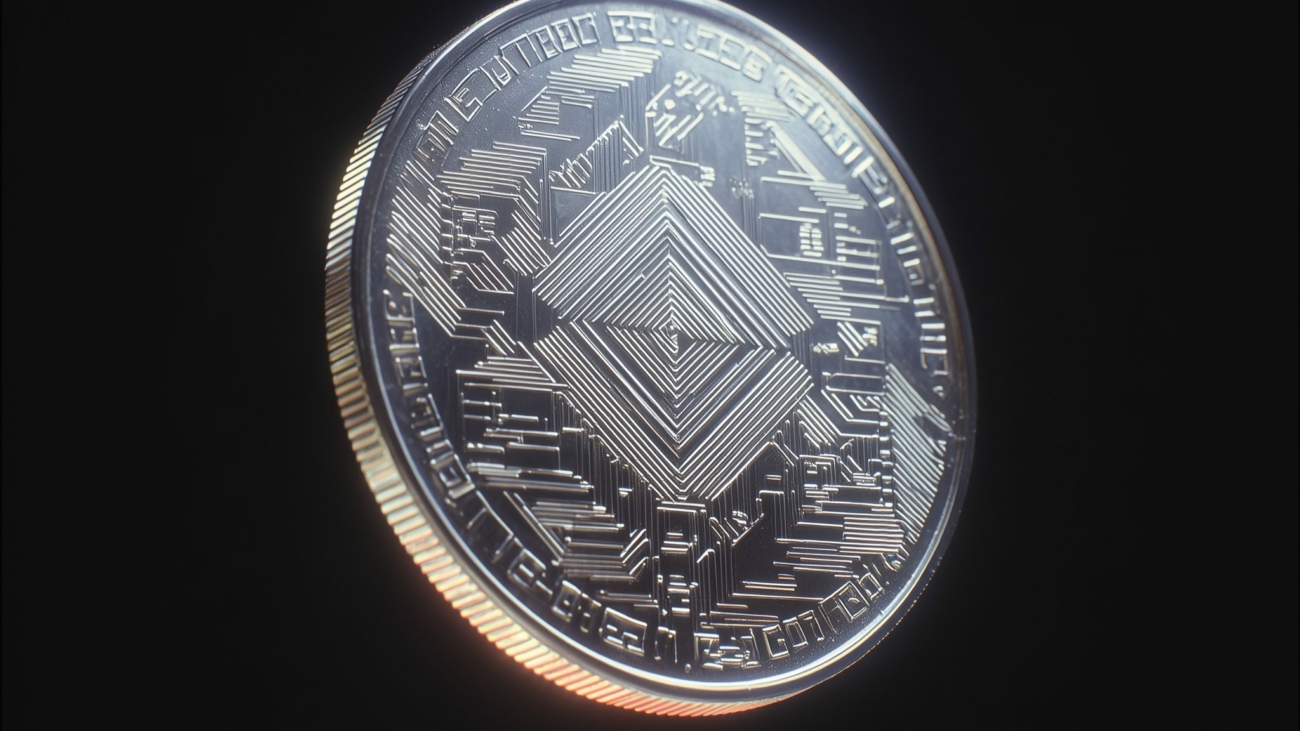
XRP has emerged as one of the standout performers in the 2026 crypto bull market, consistently leading altcoin rallies and attracting an unprecedented level of institutional interest. A recent survey by Coinbase revealed that 25% of institutional investors are actively considering adding XRP to their portfolios in 2026 — a stunning shift in sentiment for an asset that spent years mired in regulatory uncertainty following the SEC’s lawsuit against Ripple Labs. With the legal overhang now largely resolved and XRP’s underlying technology gaining traction in global payments infrastructure, the case for XRP as a major institutional portfolio allocation has never been stronger.
XRP’s Remarkable Legal Journey: From SEC Lawsuit to Regulatory Clarity
To appreciate XRP’s current momentum, it is impossible to ignore the long shadow cast by the Securities and Exchange Commission’s December 2020 lawsuit against Ripple Labs. The SEC’s complaint alleged that XRP was an unregistered security and that Ripple had conducted an illegal securities offering. The lawsuit immediately triggered a wave of delistings from US exchanges, a collapse in XRP’s price, and years of legal uncertainty that kept many institutional investors on the sidelines. The eventual outcome of the Ripple case — delivered in stages through 2023 and 2024, with a final settlement in 2025 — proved to be a landmark victory for the broader crypto industry. The court’s ruling that XRP sales on secondary markets to retail investors did not constitute unregistered securities offerings established an important precedent. The regulatory clarity that XRP now enjoys makes it a relatively “safe” altcoin from a compliance perspective, even as many competing tokens face ongoing regulatory uncertainty.
XRP’s Technology: The Payments Infrastructure Play
Beyond its regulatory status, XRP’s investment thesis rests on its role in global cross-border payments — one of the most economically significant but inefficient components of the traditional financial system. The current global payments infrastructure, built on legacy systems like SWIFT and correspondent banking networks, is slow, expensive, and opaque. International wire transfers can take 1–5 business days to settle and incur significant fees. XRP and the XRP Ledger offer a radically more efficient alternative. XRP transactions settle in 3–5 seconds, cost a fraction of a penny in fees, and can bridge between different fiat currencies using XRP as an intermediary — a function called “bridge currency” in Ripple’s payments architecture. Ripple’s On-Demand Liquidity (ODL) product, which uses XRP to provide real-time settlement for cross-border payments, has been adopted by financial institutions in dozens of countries across Asia, Latin America, Africa, and Europe. The scale of the opportunity is enormous — the global cross-border payments market processes approximately $150 trillion in transactions annually.
Institutional Survey: Why 25% Are Eyeing XRP
The Coinbase survey showing that 25% of institutional investors are considering XRP allocation in 2026 is a remarkable data point. Several factors explain this institutional interest. First, regulatory clarity is paramount — institutions that could not justify XRP exposure during the SEC lawsuit period now have a legal framework within which to proceed. Second, XRP offers a differentiated value proposition within a diversified crypto portfolio. Most institutional crypto allocations are heavily weighted toward Bitcoin (store of value) and Ethereum (smart contract ecosystem). XRP offers a third thesis — exposure to the global payments infrastructure opportunity — that does not significantly overlap with BTC or ETH. Third, XRP’s relatively stable technical fundamentals and the operational continuity of Ripple Labs provide institutional comfort that more decentralized or anonymous crypto projects cannot. Institutions can conduct due diligence on Ripple’s business, assess its partnerships and revenue prospects, and engage with its management team. Fourth, the potential for XRP-specific ETF products to be approved by the SEC would open XRP to a new category of investors who prefer regulated fund structures over direct crypto ownership.
XRP Price Action: Leading the Altcoin Rally
XRP’s price performance in 2026 has been among the most impressive in the altcoin market. Starting the year with significant momentum built up from its 2024-2025 legal victories and market recovery, XRP has consistently outperformed Bitcoin and most major altcoins during periods of broad crypto strength. The pattern of XRP leading altcoin rallies reflects several dynamics: its high liquidity (it is one of the most traded crypto assets globally), its large and active retail investor base in Asia and Latin America, and its sensitivity to news about Ripple’s business partnerships and regulatory developments. The “altcoin rotation” dynamic — where capital flows from Bitcoin into higher-beta altcoins after Bitcoin establishes a strong foundation — has historically been particularly favorable for XRP. Technical analysis of XRP’s price chart shows a well-established pattern of accumulation during periods of uncertainty followed by sharp, powerful breakouts. Analysts who track XRP’s on-chain activity note that XRP holder addresses have been growing consistently, suggesting broad-based accumulation.
Competition and Risks: Not All Smooth Sailing
A balanced assessment of XRP must acknowledge the significant competitive challenges it faces. In the cross-border payments space, XRP faces competition from other blockchain-based payment solutions (Stellar’s Lumens/XLM has a similar value proposition), traditional financial technology firms upgrading their systems, and the development of central bank digital currencies (CBDCs) that could theoretically serve some of the same bridge currency functions as XRP. The CBDC threat is particularly worth monitoring. Several major central banks — including the People’s Bank of China (which has deployed its digital yuan widely) and the European Central Bank — are developing digital versions of their currencies that could enable faster cross-border settlement without requiring a cryptocurrency intermediary. Additionally, XRP’s relationship with Ripple Labs remains a double-edged sword. The close association between XRP and a specific company introduces centralization concerns and creates ongoing regulatory exposure.
The Road Ahead: XRP ETF and Further Institutional Adoption
The most significant near-term catalyst for XRP could be the approval of a spot XRP ETF by the US Securities and Exchange Commission. Following the approval of spot Bitcoin ETFs in January 2024 and spot Ethereum ETFs later that year, the crypto industry has been eagerly awaiting similar treatment for XRP. Multiple asset managers have filed registration statements for XRP ETFs, and the SEC’s evolving posture toward crypto has made approval increasingly likely. A spot XRP ETF would be transformative for institutional adoption. It would allow pension funds, endowments, family offices, and retail investors who prefer regulated investment vehicles to gain XRP exposure through familiar financial products. The first Bitcoin ETF triggered billions of dollars in inflows within days of its launch; an XRP ETF could generate comparable or even larger initial inflows given the pent-up institutional demand documented in the Coinbase survey.
Conclusion: XRP’s Moment Has Arrived
XRP’s resurgence in 2026 is not a fluke or a speculative bubble — it reflects the convergence of genuine regulatory progress, growing institutional interest, expanding real-world utility in the payments sector, and favorable macro conditions for crypto assets broadly. The Coinbase survey showing 25% institutional interest in XRP allocation suggests that the smart money is recognizing what retail XRP holders have long believed: that this is an asset with a compelling fundamental use case and the institutional backing to realize its potential. Whether XRP ultimately achieves its most ambitious price targets depends on how successfully Ripple’s payments network scales, whether XRP-based ETFs receive regulatory approval, and how the broader global payments industry evolves over the next several years. For those willing to take a medium-term view, the confluence of factors aligning for XRP in 2026 represents one of the more intriguing investment propositions in the current crypto market cycle.


Leave A Comment