
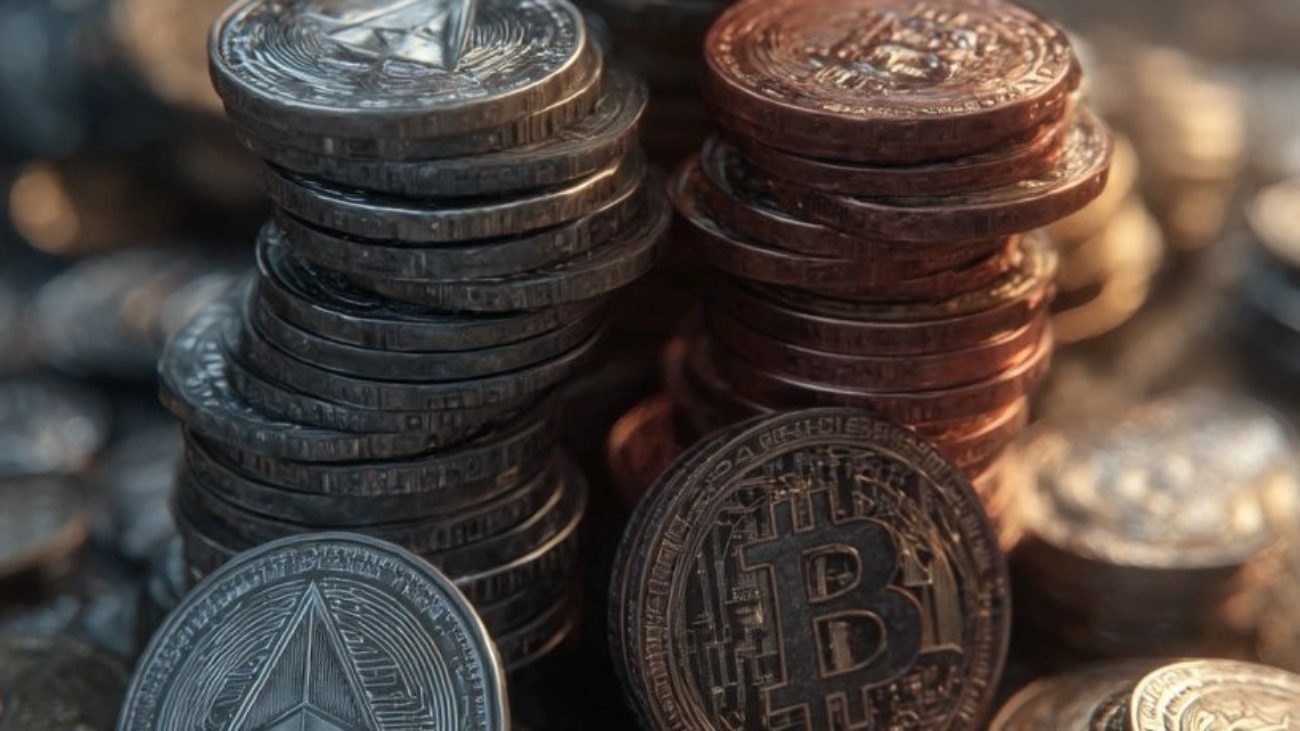
The altcoin market is flashing some of the most intriguing structural signals in years, with several converging developments suggesting that altcoin season 2026 may be closer than the current market sentiment implies. While Bitcoin dominance has remained elevated and macro headwinds from Trump’s tariff policies have suppressed risk appetite across the crypto market, the fundamental developments occurring beneath the surface — including Solana’s bold bet on AI agent payment infrastructure, the launch of leveraged ETFs for Cardano and Polkadot, and improving technical structure across multiple large-cap altcoins — paint a picture of a market preparing for a significant rotation from Bitcoin to alternative digital assets that has historically defined the most rewarding phase of crypto market cycles.
Solana’s AI Agent Payment Infrastructure: The Next Frontier
Perhaps the most significant development driving altcoin season 2026 narratives is Solana’s emergence as the leading blockchain infrastructure for artificial intelligence agent payments. The convergence of AI and blockchain technology has been a speculative narrative for several years, but 2026 represents the first time that genuinely production-ready AI agent payment solutions are being deployed at scale on a public blockchain, with Solana positioned as the clear technical leader in this emerging application category.
The fundamental use case is straightforward but profound: AI agents — autonomous software programs that can make decisions and take actions without direct human instruction — increasingly need to transact economically with each other and with human-operated services. An AI agent that needs to purchase computational resources, API access, data feeds, or other digital services requires a payment mechanism that is programmable, fast, low-cost, and accessible without the friction of traditional financial system integration. Solana’s combination of sub-second transaction finality, fees measured in fractions of a cent, and a robust smart contract ecosystem makes it the natural home for AI agent payment infrastructure in 2026.
Several significant projects have launched or announced AI agent payment infrastructure on Solana in early 2026. The SEND token protocol has emerged as a leading framework for AI-to-AI payment channels, enabling autonomous agents to open, fund, and close payment relationships without human intervention. Blinks — Solana’s transaction link protocol that embeds executable blockchain actions in regular URLs and social media posts — has found an unexpected second life as infrastructure for AI agents that need to interact with blockchain applications through programmatic web interfaces rather than wallet-connected browser sessions. These developments are driving genuine developer activity and user growth that provides fundamental support for altcoin season 2026 Solana narratives beyond pure speculation.
Leveraged ETFs for ADA and DOT: Institutional Tools for Altcoin Exposure
A landmark development for altcoin season 2026 is the launch of leveraged exchange-traded funds providing exposure to Cardano (ADA) and Polkadot (DOT) — the first leveraged ETF products for major altcoins beyond Bitcoin and Ethereum in the U.S. market. These products, which provide 2x or 3x leveraged daily returns tracking their respective underlying assets, represent a significant expansion of the institutional toolset for expressing directional views on altcoin performance within regulated financial market infrastructure.
The regulatory pathway for ADA and DOT leveraged ETFs was opened by the SEC’s accelerated ETF approval framework established following the Bitcoin and Ethereum spot ETF approvals of 2024 and 2025. The new framework significantly reduced the review time for crypto ETF applications that meet specified criteria around underlying asset liquidity, market surveillance, and custody standards. Both Cardano and Polkadot qualified for this accelerated review track based on their market capitalization, trading volume on regulated venues, and the availability of established institutional-grade custody solutions.
The launch of leveraged ADA and DOT ETFs matters for altcoin season 2026 beyond their direct impact on these two specific assets. It establishes a precedent and regulatory framework for leveraged altcoin ETF products more broadly, suggesting that similar products for Solana, Avalanche, Chainlink, and other major altcoins could follow. Each new leveraged ETF product brings additional Wall Street distribution, professional trading infrastructure, and retail accessibility to an altcoin that previously required crypto-native exchange accounts and self-custody wallets to access. This infrastructure expansion systematically lowers the barrier to institutional and retail participation in altcoin markets — a structural tailwind for altcoin season 2026 that compounds with each new ETF approval.
Altcoin Season Indicators: Reading the Market Structure
Experienced crypto market participants use several technical and fundamental indicators to identify the onset and progression of altcoin seasons. Monitoring these indicators provides the most reliable framework for navigating altcoin season 2026 in real time rather than in retrospect. The Bitcoin Dominance Index — Bitcoin’s share of total cryptocurrency market capitalization — is perhaps the most widely watched altcoin season indicator. When Bitcoin dominance peaks and begins declining, capital rotation from Bitcoin into altcoins typically accelerates, creating the explosive price moves that characterize altcoin seasons. Currently, Bitcoin dominance remains elevated at approximately 58% to 60% — historically consistent with late-cycle Bitcoin accumulation phases that have preceded altcoin seasons rather than with full altcoin season conditions.
The Altcoin Season Index, which measures what percentage of the top 100 altcoins have outperformed Bitcoin over the past 90 days, is currently reading in the “Bitcoin season” range. However, the rate of change in this indicator has been trending toward the altcoin season threshold, suggesting that momentum is building even if the formal altcoin season designation has not yet been triggered. Historical patterns from the 2021 and 2023 to 2024 cycle suggest that the transition from Bitcoin season to altcoin season can occur relatively rapidly — sometimes within weeks rather than months — once the technical and fundamental prerequisites are in place.
Large-Cap Altcoin Outlook: Ethereum, SOL, ADA, DOT
Ethereum remains the cornerstone large-cap altcoin play for altcoin season 2026, with its combination of institutional adoption momentum, staking yield, and technical upgrade roadmap providing the strongest fundamental case of any non-Bitcoin digital asset. The Ethereum Foundation’s decision to stake 45,000 ETH in a single day has reinforced institutional confidence in Ethereum’s long-term value proposition, and the approaching Glamsterdam upgrade is expected to provide additional technical catalysts. ETH’s path to altcoin season outperformance runs through reclaiming $2,500 and then building momentum toward the $3,000 to $4,000 range that most analysts consider achievable in a genuine altcoin season environment.
Solana’s altcoin season 2026 prospects are perhaps the most debated in the large-cap space. The network’s AI agent payment narrative provides genuine fundamental differentiation, but the $285 million Drift Protocol hack has raised questions about Solana’s security standards that will take time to fully resolve in the institutional investment community. SOL’s price recovery from the hack-related selloff will be an important test of the market’s confidence in Solana’s resilience and the strength of its developer ecosystem’s commitment to the network.
Cardano and Polkadot find themselves in an unusual position for altcoin season 2026 — their leveraged ETF launches have brought them mainstream financial attention at a moment when both networks are executing on technical roadmaps that their communities believe will finally deliver on long-promised capabilities. ADA’s ongoing development of smart contract infrastructure and Polkadot’s parachain ecosystem expansion provide fundamental narratives for price appreciation beyond pure ETF-driven demand. For altcoin season 2026 investors seeking exposure to these networks, the new leveraged ETF products provide a regulated, custody-free alternative to direct token ownership that could attract significant capital from traditional finance participants who have been waiting for exactly this type of regulated access point.
Altcoin Season 2026 Strategy: Risk Management in a Volatile Market
Navigating altcoin season 2026 requires a fundamentally different risk management approach than Bitcoin investing, given the higher volatility, lower liquidity, and greater vulnerability to narrative-driven price swings that characterize the altcoin market. The most successful altcoin investors historically have combined conviction-based position sizing in high-quality projects with strict stop-loss disciplines that prevent the recursive losses that can turn a successful altcoin season trade into a portfolio-destroying hold through the subsequent bear market.
Position sizing for altcoin season 2026 should reflect the asymmetric risk profile of these assets: the potential for 5x to 20x returns in genuine altcoin season conditions must be weighed against the equally realistic possibility of 80% to 95% drawdowns from peak prices in the subsequent market correction. Investors with appropriate risk tolerance and time horizons who understand the altcoin season 2026 dynamics described throughout this article may find compelling opportunities in projects with genuine technical differentiation, growing developer ecosystems, and institutional adoption catalysts. The combination of Solana’s AI agent payment infrastructure, the new regulated ETF access points for ADA and DOT, and the broader institutional adoption framework being established by the CLARITY Act creates a more fundamentally robust foundation for altcoin season 2026 than any previous cycle in cryptocurrency market history. Whether this fundamental improvement translates into timely price appreciation will depend as much on macro conditions and Bitcoin’s next directional move as on the intrinsic quality of individual altcoin projects — which is why sophisticated altcoin season 2026 investors monitor both the macro environment and project-specific fundamentals in making their allocation decisions.


